
Workshops
Apps for PE
Plick Your Assessment
 I will discuss how an app called Plickers set Voxer and Twitter on fire!
Plickers allows you to assess students quickly and easily. This new technology will make assessing students much easier! I will also discuss some collaborative global projects that I have been a part of during the year through Twitter and Voxer chats. You will see how easy it is to engage in international collaboration that will push your teaching to the next level.
How I have used Google Drive to incorporate assessment and documentation to aid in workflow, using add ons such as flubaroo, doc-appender, autocrat.
 Using Multi-Media to Showcase the 21st Century Physical Education Classroom. Through APPS such as iMovie and Vimeo you’ll be able to provide a window into your classroom for parents, and others in the school community and beyond. Following my presentation you’ll walk away with a brief iMovie that highlights the learning in your classroom.
Create, Collect, Celebrate, Connect: The 4C’s of Meaning Technology Integration in #PhysEd
Workshop 1: Create, Collect, Celebrate, Connect: The 4C’s of Meaning Technology Integration in #PhysEd
Theme: Apps in PE
With technology becoming a more permanent part of #PhysEd programs we must begin to think about the ways in which we can meaningfully integrate it into our teaching & learning. Join Nathan as he shares his 4C’s of Meaningful Technology Integration in #PhysEd.
In this classroom workshop you will:
- Discover tools to help your students CREATE meaningful content which demonstrates their knowledge and understanding in #PhysEd
- Find out how to COLLECT this student created content and easily organise it.
- See examples of how you can CELEBRATE student learning & achievement in your #PhysEd program.
- Begin to CONNECT yourself and your students with other #PhysEd programs worldwide.
Workshop 2 – Inquiry in #PhysEd 101 – The What, Why & How
Theme: Assessment in PE
“Isn’t inquiry based learning just chaos? If the kids are in control how can I be sure they are meeting the learning outcomes?”
Far from being a free for all, inquiry based learning is a carefully planned approach to deliver your curriculum to your students in an engaging and meaningful way. In this practical workshop attendees will experience the WHY, WHAT & HOW of Inquiry in #PhysEd. Participants will explore how to get their students thinking critically about games while playing them.
The workshop will cover:
- Why Inquiry based learning in #PhysEd is important.
- What Inquiry based learning in #PhysEd looks like.
- How you can use thinking routines to promote a culture of critical thinking in your classes.
- How an inquiry based approach can be used successfully alongside standards based grading.
- Nathan will share how he designs games and uses technology to encourage students to inquire into strategies, tactics and teamwork through the use of questioning and situational game scenarios.
Assessment in Physical Education
Developing Game Sense with Go Pros
 GoPro Cameras and similar products have given PE teachers and coaches the opportunity to assess student decision making from a first person perspective. This gives teachers the unique ability to help students process their sporting environment effectively so that they may develop their ability to read, react, respond and recover in various situations. In this workshop, participants in this presentation will gain hands on experience using Go Pros and learn how to use the footage to drive their evaluation practices by assessing their own Game Sense. Attendees will also receive access to all the resources we have developed, including assessments tools and rubrics. Participants are encouraged to download the GoPro app for their smartphone or tablet before attending.
Connecting Teachers
 Physical Education develops students’ physically, mentally and socially. That is just what is happening @ #SISrocks and I want to share the success and brainstorm ways that it can continue to develop. Through Intramurals, Project Sixteen5 and Two4Zero MinZ, my students are becoming more active and engaging in not only physical activity but their literacy.
Student Peer Assessment Through Inquiry Based Learning
 Essential to a student developing and improving their skills, is their capacity to analyse their own performance and set targets for improvement. This workshop focuses on using formative peer assessment as an approach to teaching students how to analyse and identify the most important aspects of a skill and apply this understanding to their own abilities as a player and a coach. Educators will engage in integrating these skills through the learning lens of a volleyball unit. Participants will practice using visible thinking routines and inquiry based learning.
You are never too old to learn new tricks
 So Many Options, So Many Tools, So Many Apps—
Where Do I Start, and Is It Really Worth the Effort?
Where are you and your school on the continuum of integration technology in the PE curriculum?
I will share my continuing journey of facilitating the integration of technology into PE classes I have taught in the last 10 years here in Hong Kong and in New Zealand. This workshop aims to target young and experienced teachers interested in growing their school in the use of various forms of technology to assist you the teacher with assessing student work, resourcing units of work, collating resources, using some of the tools you have at
school, cameras, phones, computers, Apple TV,big screens. It is my intention that you will walkaway with some practical ways to build shared knowledge, develop common understandings, and use the tools available to respond to the challenges faced with using technology in physical education.
Swimming in the PYP
 Swimming in the PYP – Are you new to teaching swimming? Perhaps water is not your favorite element? Do you want to change your program a little or get new ideas? If so, this is the session for you.
We will be talking about how to start a swimming program at a school and how to plan the units for the year. We will look at different methods you could use to assess the students and which apps would be good to use by the pool and for swimming. We will be looking at what you could include as part of your program, besides teaching the four strokes and how to set up swim meets/house galas or a swim team.
If you have specific questions you would like to have answered or talk about during our session, please email me at kerstin.bender@stonehill.in
The “Wired” PE student
 This presentation hits 2 of the above strands; Apps for PE and Assessment in PE.
In this presentation participants would be outfitted with an iPod touch and iPod touch belt. They would then be led through a brief volleyball lesson including warm up, video analysis and assessment while wearing the belts.
Specifically during the lesson they would utilize various apps on the iPods to perform their warm-up, video their skills, and measure their footsteps. Participants would then complete the google exit form self-assessment on the iPods.
“Inquiry in #PhysEd 101 – The What, Why & How Theme: Assessment in PE”
Workshop 1: Create, Collect, Celebrate, Connect: The 4C’s of Meaning Technology Integration in #PhysEd
Theme: Apps in PE
With technology becoming a more permanent part of #PhysEd programs we must begin to think about the ways in which we can meaningfully integrate it into our teaching & learning. Join Nathan as he shares his 4C’s of Meaningful Technology Integration in #PhysEd.
In this classroom workshop you will:
- Discover tools to help your students CREATE meaningful content which demonstrates their knowledge and understanding in #PhysEd
- Find out how to COLLECT this student created content and easily organise it.
- See examples of how you can CELEBRATE student learning & achievement in your #PhysEd program.
- Begin to CONNECT yourself and your students with other #PhysEd programs worldwide.
Workshop 2 – Inquiry in #PhysEd 101 – The What, Why & How
Theme: Assessment in PE
“Isn’t inquiry based learning just chaos? If the kids are in control how can I be sure they are meeting the learning outcomes?”
Far from being a free for all, inquiry based learning is a carefully planned approach to deliver your curriculum to your students in an engaging and meaningful way. In this practical workshop attendees will experience the WHY, WHAT & HOW of Inquiry in #PhysEd. Participants will explore how to get their students thinking critically about games while playing them.
The workshop will cover:
- Why Inquiry based learning in #PhysEd is important.
- What Inquiry based learning in #PhysEd looks like.
- How you can use thinking routines to promote a culture of critical thinking in your classes.
- How an inquiry based approach can be used successfully alongside standards based grading.
- Nathan will share how he designs games and uses technology to encourage students to inquire into strategies, tactics and teamwork through the use of questioning and situational game scenarios.
Health & Fitness in PE
Training the Young Adolescent
 An introduction to strength training and identification of structural weaknesses/imbalances. Application of exercise prescription and programme strategies applicable to Middle School and High School PE classes.
Practical:
How to assess structural imbalances in students in a 1:1 environment and group setting. Why identifying weakness to implement and avoid in order to fix structural imbalances.
Theory:
Bio-mechanical hard wiring: Key foundation stage, Active Start, Neurological window, multi sport, Hypertrophy and Strength.
Implementing physical training during PE Class during sport. Applying full range of movement to exercise, introducing tempo to improve overall strength.
The Power of Visualization & Mindfulness in Sport Mastery and Physical Education
 The Power of Visualization & Mindfulness in Sport and PE (Grades 4-12) Neila will delve into the power of visualization, mindfulness, and yoga during this session in order to help our learners understand the importance of embracing a growth mindset in PE, health, and well-being. In this workshop, we will explore the connection between brain, body, and health and its impact on learning. No previous yoga experience required.
Movement and fitness – The teachers guide to competency and confidence
 This practical workshops develops confidence around the teaching of movement and fitness within the school structure. The workshop will cover a range of games and dynamic warm ups to implement into the school curriculum. Please come prepared to have fun and engage with movement as medicine.
Health and happiness
 Why there is no magic switch for health and happiness and why student happiness starts with you.
With such limited contact time with students I explore an holistic approach of well being and happiness through physical education.
Martial Arts in Physical Education
 I will present how I have incorporated martial arts in physical education over the years. I have presented it as a mini unit, an after school club, a self-defence class and mostly within creative movement. The session will be a practical session with some reference to how I have assessed the units I have taught. There will be some mini games and skills which could be used in classes. The video attached is from the recent job-a-like I organised at Chadwick. The teachers put together a mini poomsae/sequence. to present the skills they had learned during my presentation.
Heart Rate Monitors in a Fitness-Based PE Program
The Shanghai American School Pudong Physical Education department in the Middle School has been using Heart Rate Monitors (HRM) for the last decade. The curriculum is therefore fitness-based. In the Middle School, each student is expected to maintain their heart rate within a targeted heart-rate zone for a minimum of 30 minutes each class.
Our presentation will be about how the HRM is implemented to promote cardiovascular fitness and as a tool for daily objective assessment. In addition, we will talk about what it means to plan PE lessons with a fitness-based approach rather than a skill-based focus.
How did Shanghai American School come to this? The school strongly believes in the research presented by Dr. John Ratey who states that fitness-based PE literally helps grow and connect nerve cells in the brain and that this creates “the perfect environment for learning.” Additional research shows that learning goes up, anxiety and mental health issues are down, and even discipline issues decrease as a result of fitness-based PE program
Athletic Trainers in the International School Setting
 Athletic trainers specialize in the complete management of the wide array of sport-related injuries and emergencies. Physiotherapists, school nurses, and even some physicians are not up to date or trained in concussion management, exertional heat illnesses, athletic tapings and first aid, sport specific rehabilitation, cervical spine injuries, and emergency action planning. This athletic training specialty provides the best possible care to the student-athlete and helps protect the school from possible liability.
In addition to sports medicine care, athletic trainers provide a wealth of knowledge and specialized skills to an international school. While at Concordia, I have also acted as the staff wellness coordinator. This role has allowed me to develop various health promotion programs and act as a medical resource for Concordia teachers. I have developed nutrition and fitness plans, evaluated injuries, implemented rehabilitation programs, and acted as a medical liaison. I have also volunteered as sport coach, strength and conditioning coach, classroom guest lecturer, and mentor to prospective healthcare students.
It is my goal and passion to help create athletic training positions internationally. I would like to speak on these benefits to the PE teacher community in the hopes that they take the information back to there schools, administrators, athletic directors and lobby for student safety. PE teachers and coaches are often stuck in the middle between player participation and safety. Athletic trainers act as an objective and informed medical provider and take the decision making process out of the PE teacher/coaches hands. The session would also focus on easy ways they can recruit and create these positions in a cost-effective manner.
Motor Remedial Therapy – Developing a fundamental motor skill program at your school
 My presentation focuses on the Motor Remedial Therapy program that I have initiated at UNIS Hanoi. The program involved a motor skill screening for all students in the school in Kindergarten 1 and Kindergarten 2, which is based on the established Dutch system.
AquaSync Routine: Creativity in the Water
 Are you looking for a different way for your students to stimulate and engage their creative side during PE class? This workshop is designed to help teachers implement an innovative lesson with the option of integrating a cross-curricular project during the students’ swim unit. In teams, students design their own synchro and aquafitness routine to music to learn about different movement concepts in the water. This benefits students as it builds a foundation for transfer of skill in a variety of water activities. Attendees will learn about the project, view student work and be able to try synchro and aquafitness movements in the water.
TGFU (Teaching Games for Understanding)
Assessing Understanding in the TG4U Model
 This workshop will help you get the most out of the TGFU model, specifically how to use the TGFU model to enhance your students’ conceptual understanding. We will explore the difference between knowledge and understanding, how a focus on concepts enhances learning, and effective questioning to develop and assess conceptual understanding.
Increasing participation through accessible concept driven warm up games
 Due to the increase in sedentary lifestyles, coupled with the associated health risks, the need to inspire students to become more physically active has never been so apparent. As physical educators it is our responsibility to ensure students are active, particularly during PE lessons. Studies have highlighted, however, that prolonged teacher talk and an emphasis on repetitive de-contextualised sporting skills can contribute to inactivity. This presentation will introduce a number of warm up games intended to increase activity and engage students, which can in turn facilitate a far more positive and enjoyable learning environment.
TGfU and Visible Thinking Routines
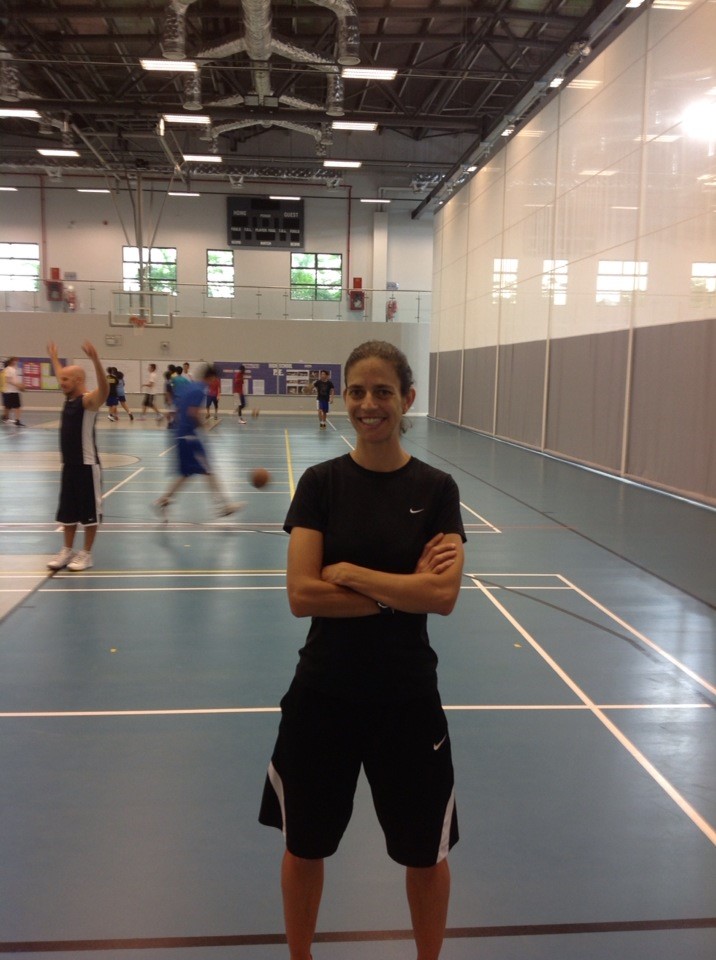 The last two years I have been experimenting with using TGfU in my inquiry into Community and Leadership through Invasion games for my MS (Grade 8) MYP Students and the use of a few Visible Thinking Routines as part of the learning and assessment of this unit. I have presented this as a practical unit for teachers to do together in a Gym with time for completing the VTRs as part of the learning conversation and discussion.
Participants would go through Invasion Games warm ups and then progressional play in groups using varied equipment, space and rules and they would go through 3 VTRs as part of this session. I ran this over 2h last time, so it all depends on time. I have slides that are available (see link in previous box) and will update them for this workshop.
Tennis Hot Shots: A practical workshop demonstrating how tennis has integrated the theoretical and practical principles of the Game Sense Approach
The instructional practices of tennis teaching/coaching internationally have traditionally been characterised by high levels of explicit verbal instruction with a particular emphasis on developing technique in isolation and prior to the tactical aspects of the game. However, in recognising that players should be exposed to planned activities that foster development in four central domains – the physical (technique), social (interaction), cognitive (decision making) and affective (fun and enjoyment) domains, Tennis Australia has developed the Hot Shots program that acknowledges the benefits of incorporating a more game-centred teaching approach for tennis. Learning is positioned, at least initially, within modified games to emphasise understanding of the way rules shape game behaviour, tactical awareness, decision-making and the development of contexualised stroke mechanics (technical skill). This workshop will present a variety of tennis games and play practices from the Tennis Australia Hot Shots program adhering to the guiding principles of the Game Sense approach, where players develop their technical skills with understanding by being actively involved in game play in an inquiry environment distinguished by the pedagogical use of questions to shape the complementarity of technical and tactical game development.