
Presentations
The 3D Institute provides top-quality online and in-person training for coaches and schools around the world.
China 2025

Susan Huang
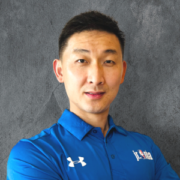
Peter Liu

During the interactive two day workshop, you’ll take part in 6 individual modules, each taking you through a step-by-step approach to the event and leaving you with in-depth knowledge of how to teach athletics to students of all abilities.
Singapore 2025

Martin Brockman
In this session, I will share practical strategies for reducing bias in the health classroom using AI tools, including a “School Sidekick”, a well-crafted AI assistant aligned to your curriculum and learning standards.
Singapore 2025

Sherilyn (Shez) Billett
In this session, we will introduce fundamental skills for badminton like basic grip and movement, and also different feeding skills & technique (with & without badminton racket).
Singapore 2025

Erica Khoo

Sahir Edoo

Chua Yong Joo
In this session, we will introduce the basic rules, competition format and scoring system will also be introduced too.
China 2026
Erica Khoo
Sahir Edoo
This presentation will focus on innovative and practical approaches to teach the fundamentals of track and field in a fun, challenging and engaging way.
Middle East 2026
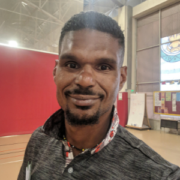
Justin Cresser
Are you a fan of gamification? Have you tried it before? Would you like to? Implementing gamified experiences into your projects, units and even your whole year can be done! We'll be talking about Intrinsic and Extrinsic Motivation as a way to reach our students learning styles.
Phuket 2023
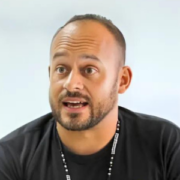
Carlos Galvez
In this practical-based workshop, two Singapore PE teachers will share how they design their lessons to nurture self-directed learners through practical strategies underpinned by assessment and feedback literacy. Practical Strategies include self & peer assessment tools, thinking routines, the use of rubrics, data collection as performance indicators, etc. Participants will be able to experience strategies and tools designed in schools that encourage students to play an active role in their learning.
Phuket 2023
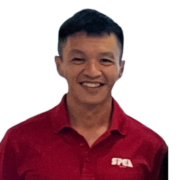
Louis Ho

Stella Yap
The session aims to provide a deeper understanding of how cycle tracking can optimise performance, nurture athlete well-being, and foster a deeper understanding of female physiology.
Hong Kong 2023
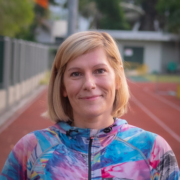
Cassandra Louise Till

Tahia Marshall
This workshop equips attendees with strategies and tactics to train and educate athletes to apply and transfer these skills to classroom and personal realms.
Hong Kong 2023

Andy Riise

Nate Last

GET SOCIAL WITH #PHASE


