
Presentations
Leadership within international education is challenging due to the complexities of cultural differences among staff.
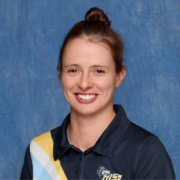
Rachel Ford

Participants will participate in a variety of activities and perform the assessments themselves to be better able to implement them into their own classrooms.
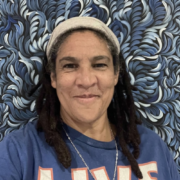
Meaghan Wilson
This presentation explored strategies for creating more inclusive, play-based activities in Physical and Health Education (PHE) that foster student connection, engagement, and equitable participation. It highlighted how traditional grouping methods in PE—whether based on skill level, gender, or social circles—can unintentionally lead to exclusion, with common issues such as skilled players dominating gameplay, friends only interacting with each other, or boys excluding girls during play.

Finian Kennedy

Peter Simons
Equip coaches with a framework and practical tools for selecting, training, and supporting team captains.
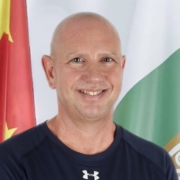
Eric Rodine
This session presents a practical, research-informed model for improving assessment in PE and sport through the use of digital Sportfolios and live formative assessment using Plickers.

Toby Sumerfield
This session empowers educators to become action researchers, using reflective, culturally responsive AI-supported inquiry to continuously improve their teaching.

Martha James
The goal of this hands-on workshop is for teachers and coaches to design educational experiences grounded in an adolescent developmental approach, informed by principles of Long-Term Athlete Development (LTAD) and growth and maturation science.

Karan Bahadur Singh
Are you a fan of gamification? Have you tried it before? Would you like to? Implementing gamified experiences into your projects, units and even your whole year can be done! We'll be talking about Intrinsic and Extrinsic Motivation as a way to reach our students learning styles.

Carlos Galvez
In this practical-based workshop, two Singapore PE teachers will share how they design their lessons to nurture self-directed learners through practical strategies underpinned by assessment and feedback literacy. Practical Strategies include self & peer assessment tools, thinking routines, the use of rubrics, data collection as performance indicators, etc. Participants will be able to experience strategies and tools designed in schools that encourage students to play an active role in their learning.
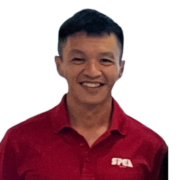
Louis Ho

Stella Yap
The session aims to provide a deeper understanding of how cycle tracking can optimise performance, nurture athlete well-being, and foster a deeper understanding of female physiology.
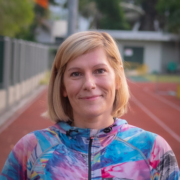
Cassandra Louise Till

Tahia Marshall

GET SOCIAL WITH #PHASE


