
Overview
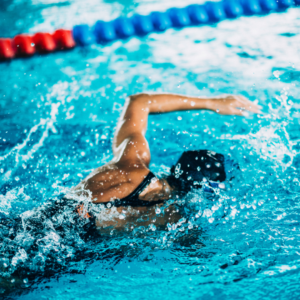
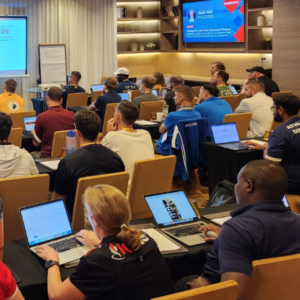
Dive into a dynamic, practical, and thought-provoking session designed for Aquatics and PE educators who want to take their programs from “good” to exceptional. Using the Hong Kong International School (HKIS) Aquatics Program as a real-world case study, this workshop explores what it truly takes to build, sustain, and continuously elevate an Aquatics program that is safe, student-centered, and built for lifelong impact.
A Two-Part Experience for Aquatics Program Directors and Coordinators
More Sessions
Building a Cohesive Aquatics Learning Continuum: From Freestyle Foundations to Water Polo Passion

Aquatics Director, American School of Dubai
Explore, Play, Discover: A Play-Based Approach to Pre-School Aquatics
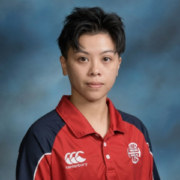
Aquatics Coordinator, Hong Kong International School

Swimming Instructor, Hong Kong International School
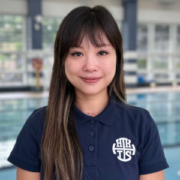
Swimming Instructor, Hong Kong International School
How Children Learn in Water: Brain Development, Family Engagement, and Early Aquatic Learning from Infancy Through the Preschool Years
Swimming is not the first thing babies learn in water—learning itself is.
The first three years of life represent the most dynamic period of brain development. During this critical window, movement, sensory experiences, emotional regulation, and social interaction shape the neural foundations that support confidence, motor competence, communication, self-regulation, and lifelong learning.
The aquatic environment offers a unique developmental setting where the vestibular, proprioceptive, tactile, visual, auditory, and respiratory systems are continuously engaged. When aquatic experiences are intentionally designed around child development rather than simply teaching swimming skills, they become powerful opportunities to support the whole child.
This presentation explores how an early positive relationship with water builds developmental foundations that benefit every child—from the typically developing child discovering movement, confidence, and independence, to the future athlete who may later pursue higher levels of aquatic performance. During the first years of life, the developing brain rapidly forms and strengthens neural networks through movement, sensory experiences, exploration, repetition, and meaningful interaction. These early neural foundations facilitate the acquisition of increasingly complex aquatic skills, improve motor coordination, body awareness, physical literacy, and create richer opportunities for future learning and long-term athletic development.
Rather than focusing solely on teaching techniques, participants will discover how developmental science, motor learning, sensory integration, and family engagement can transform early aquatic education into a richer and more meaningful learning experience.
A central focus of this session is the role of the family. Parents and caregivers are not passive observers—they actively influence children’s confidence, resilience, autonomy, and willingness to explore. Understanding how to educate families becomes just as important as teaching children.
The presentation will also examine how these same developmental principles can be adapted for neurodivergent children and children with diverse developmental profiles, including Autism Spectrum Disorder (ASD), Down syndrome, sensory processing differences, visual impairment, hearing impairment, and other developmental challenges. Rather than teaching diagnoses, participants will learn to recognize individual learning profiles and create inclusive aquatic experiences that respect every child’s unique way of learning.
Combining more than thirty years of professional experience with current knowledge in child development, motor learning, and evidence-informed aquatic education, this session provides practical strategies that instructors can immediately apply to improve learning outcomes, confidence, inclusion, and lifelong engagement with water.
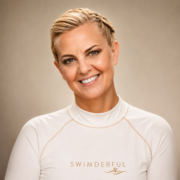
Founder & Strategic Director | Swimderful Method | International Aquatic Educator & Instructor Trainer, Swimderful
The Blue Classroom: Embedding Social-Emotional Learning Through Breath, Movement, and Challenge
Social-emotional learning is most powerful when students do more than learn about self-awareness, resilience, and self-regulation—they experience them.
Inspired by the principle, “Tell me and I forget. Teach me and I remember. Involve me and I learn,” the Blue Classroom is an innovative Physical Education unit that uses breathwork, movement, and carefully designed water-based challenges to transform social-emotional learning into lived experience.
In this session, participants will explore how physical education can serve as a powerful vehicle for developing self-awareness, emotional regulation, responsible decision-making, relationship skills, and resilience. Drawing on research from neuroscience, embodied cognition, and performance psychology, the Blue Classroom provides students with immediate feedback about their physiological and emotional state while teaching practical strategies for managing stress, maintaining focus, and responding effectively to challenge.
Participants will learn how this experiential model aligns with ISCA Social-Emotional Learning Standards and supports whole-child development through high-support, appropriately challenging learning experiences. The session will also explore how the principles of the Blue Classroom can be adapted beyond aquatic environments and integrated into physical education, outdoor education, athletics, leadership development, and broader school wellness initiatives.
Students do not learn resilience by talking about resilience. They learn resilience by experiencing challenge, reflecting on it, and discovering that they are capable of more than they imagined.
This session is ideal for educators, physical education teachers, counselors, athletic directors, and school leaders seeking innovative ways to embed social-emotional learning into authentic, engaging experiences.

Educational Consultant, APEX Peak Performance Coaching and Consulting

Peak Performance Coach, APEX
Safety by Design: Structuring a Robust Pool Safety Operating Procedure (PSOP) for Educational Institutions
Ensuring the physical safety of students and staff is the non-negotiable foundation of any successful aquatics program. This presentation delivers a comprehensive guide to building and maintaining an industry-standard Pool Safety Operating Procedure (PSOP), broken down into two critical, interconnected categories: Normal Operating Procedures (NOP) and the Emergency Action Plan (EAP).
Attendees will explore the operational mechanics of both categories to ensure their facilities are prepared for any scenario:
- Normal Operating Procedures (NOP): Discover how to map out day-to-day safety standards, including staff-to-swimmer ratios, zone visibility planning, facility access controls, and preventative risk protocols that keep a pool running safely and efficiently.
- Emergency Action Plan (EAP): Learn how to design high-stakes response protocols for critical incidents, including drowning interventions, medical emergencies, environmental hazards, and facility evacuations.
Beyond the paperwork, this session will focus on the human element: how to effectively train staff, run drills, and foster a proactive culture of safety across a K-12 campus.

Aquatics Manager, United Nations International School of Hanoi
Why Family Programming Creates Swimming Families!
This Presentation Explores the Past, Present, and Future of Aquatic Community and the Aquatic Industry.
- How Aquatics has evolved from family-based learning and its merits toward tradition, legacy, & love.
- How Aquatics has narrowed in its scope to be primarily about training, indicative by the pool lane-lines.
- How advancements in materials technology, hydrodynamics and biomechanics have created game play.
- The global advantages of interactive team game play & its socioeconomic benefits toward community.
- Full-circle toward traditional family aquatics with 21st century hydrodynamic and industrial technology.
- Revolutionizing the aquatic industry by enhancing participation, spectatorship and commercial growth.

Board Chair, SKWIM USA 501c3
PHASE AP 2026 – Hanoi
Date and Time
13 November 2026
9:00 am to 4:00 pm
Location
United Nations International School of Hanoi
Investment
Super Early Bird – $215 USD(before 31 May 2026)
Early Bird – $250USD (before 19 September 2026)
Regular – $275USD (before 17 October 2026)
Last Minute – $325USD (before 12 November 2026)
+ 5% registration fee
There are combo tickets available to attend the PHASE AP conference (pre-conference + main conference) – see registration page.
Note: You do not need to register for the main PHASE Conference to attend this one day workshop.